Where to see black bears in the Smokies
Best odds: Cades Cove Loop and Roaring Fork Motor Nature Trail at dawn or dusk, especially September through November. Stay at least 50 yards (about 150 feet) from any bear. If a bear changes its behavior because of you, you are too close. NPS posts current closures when a bear becomes food-conditioned. Do not stop in the travel lane.
Quick Facts
About Smoky Mountain Black Bears
Great Smoky Mountains National Park is one of the largest protected habitats for black bears (Ursus americanus) in the eastern United States. Approximately 1,900 bears live within the park's 522,000 acres, or about two bears per square mile, one of the densest bear populations in the country. The population has roughly tripled since the early 1990s as habitat protections and food storage rules have taken effect, and the park sees about 12 million visitors per year alongside that growing bear population.
Black bears in the Smokies are not the aggressive grizzlies of western parks (grizzlies do not live in Tennessee), but they are still large, wild animals that deserve respect. Adults weigh anywhere from 100 to 600 pounds depending on sex, season, and food availability, and they can run 30 mph in short bursts and climb trees better than you can. Understanding their behavior and knowing how to react during an encounter keeps both you and the bears safe.
For many visitors, seeing a black bear in the wild is a highlight of their Smokies trip. With the right timing and location, your chances of a sighting are excellent. Park-wide, an average of 339 negative human-bear encounters are reported every year, with the actual number of total sightings far higher.
Approximate drive time from our cabins in Gatlinburg's Chalet Village: 15 minutes to Roaring Fork (a common bear area), 45 to 50 minutes to Cades Cove (the best viewing location), and 1 hour 15 minutes to Cataloochee Valley.
Critical 2026 Safety Rule
Always maintain a distance of at least 50 yards (150 feet) from any bear. Federal regulations make it illegal to approach wildlife inside the park within that distance. If a bear changes its behavior because of your presence (stops eating, looks at you, or moves toward or away from you), you are too close. Bears that become habituated to humans can become problem bears that must sometimes be relocated or euthanized. Your distance protects them as much as it protects you.
Planning a Smokies wildlife trip?
Our 5 Gatlinburg cabins put you 15 minutes from Roaring Fork and the most accessible bear country in the park. Wake up at first light and be among the first cars on the loop.
See Available Cabins2026 Update: Recent Incidents and Trail Closures
Spring 2026 has already seen heightened bear activity in the park, and rangers have issued several public reminders that apply for the rest of the year:
- Ramsey Cascades Trail (Greenbrier area): Multiple incidents in mid-April 2026 involving a bear approaching visitors and taking backpacks, and a separate bear that displayed aggressive behavior and briefly chased a hiker. Expect intermittent closures and pay close attention to posted notices at the trailhead.
- Abrams Falls Trail (Cades Cove): Three incidents in mid-April 2026 involving an aggressive bear, including one case where a bear bit a visitor who entered a closed area. The closure was lifted but the bear is being monitored.
- Park-wide trend: In 2025, the number of human-bear physical contact incidents dropped from 10 to 6 compared with 2024, and 23 problem bears were euthanized statewide. Officials attribute the improvement to better natural food availability and the city of Gatlinburg's rollout of bear-resistant garbage containers.
Always check the official NPS Temporary Closures page within 24 hours of your hike, especially in April, May, and October when bears are most active around trails.
Where to See Bears in 2026
Cades Cove
The most reliable location for bear sightings in the park. The open meadows bordered by forest create ideal bear habitat, and the 11-mile one-way loop road offers excellent visibility from inside your vehicle. Dawn (open at sunrise) and the two hours before dusk are prime viewing times. Bears are frequently seen in the fields, especially during berry season in July and August. Vehicle-free mornings on Wednesdays (May through September) make biking and walking the loop a safer, quieter wildlife experience; check the current schedule before you go.
Roaring Fork Motor Nature Trail
Bears are commonly spotted along this 5.5-mile, one-way scenic loop that begins at the end of Historic Nature Trail in Gatlinburg. The dense forest and abundant food sources attract bears year-round, and the road is narrow with frequent pull-offs ideal for slow wildlife driving. This location is much closer to our cabins than Cades Cove, and the loop is closed to RVs and large vehicles. The trail closes for the season in late November and reopens in late March.
Cataloochee Valley
Less crowded than Cades Cove, this remote valley on the North Carolina side of the park offers excellent bear viewing and is also the best place in the Smokies to see the reintroduced elk herd (especially during the September and October rut). Access is via a winding gravel road off I-40; high-clearance is not required, but plan an unrushed half-day trip.
Hiking Trails Known for Bear Activity
Bears can be encountered on any trail. Areas with regular sightings include Roaring Fork, the Newfound Gap corridor, Alum Cave Trail, Ramsey Cascades (currently elevated activity), Greenbrier, Porters Creek, Schoolhouse Gap, and the trails near Big Creek. See our complete Smokies hiking trails guide for current trail conditions and bear notices.
Wake up 15 minutes from Roaring Fork
Phoenix Landing cabins with private hot tubs. Be first on the motor trail at dawn. Million Dollar View (sleeps 8), Serenity (sleeps 8), or Big Sky Lodge (sleeps 12 · 10-person Jacuzzi).
Book Million Dollar ViewBookings are completed only through our official checkout. We never collect payment by email or chat.
Best Times for Bear Viewing
Time of Day
- Dawn: Bears are often most active in early morning
- Dusk: Evening feeding activity increases sightings
- Midday: Bears typically rest; sightings are less common but still possible
Seasons
- Late spring (May to June): Bears emerge from dens; mothers with cubs visible
- Summer: Active throughout the day, especially foraging for berries
- Fall (September to November): Hyperphagia, bears eat 20+ hours daily preparing for winter; very active
- Winter: Bears den, usually December through March; sightings rare
During fall hyperphagia (intense pre-winter feeding), bears may consume 20,000 calories per day. They are active throughout the day and focused on food, making them easier to spot. Combine this with fall foliage, and October is arguably the best month for bear viewing.
Bear Safety on Trails (The 5-Step Ranger Drill)
If you take nothing else away from this guide, take the BearWise basics that rangers and the Tennessee Wildlife Resources Agency teach every visitor:
- Stay 50 yards away from any bear. That is roughly half a football field. Closer than that and you are legally too close, and you risk habituating the bear.
- Never run. Running triggers a chase response. Walk away calmly while facing the bear.
- Look big and loud if the bear notices you. Raise your arms, open your jacket, group together, and speak firmly in a low voice.
- Never feed a bear, ever. Fed bears become dead bears. This includes "harmless" snacks tossed from a car window.
- Fight back if attacked. Black bears rarely attack, but if one does, do NOT play dead. Use rocks, sticks, fists, bear spray, and aim for the face and muzzle.
Before Your Hike
- Make noise while hiking: talk, clap, or call out periodically (especially around blind corners and dense brush)
- Hike in groups; bears are less likely to approach groups of 3 or more
- Keep all food in a bear-proof container or your vehicle (never in a tent or backpack left at a trailhead)
- Know the signs of bear activity: tracks, scat, claw marks on trees, and torn-apart logs
- Carry bear spray on long backcountry hikes (legal in the park; not strictly required for short front-country day hikes)
- Check the NPS website that morning for any new bear-related closures
If You See a Bear on the Trail
- Stop and assess: Has the bear seen you? What is it doing?
- Do not run: Running can trigger a chase response
- Slowly back away: While facing the bear, slowly increase distance to at least 50 yards
- Make yourself known: Speak in calm, low tones so the bear recognizes you as human
- Give the bear space: If on a trail, step off and let the bear pass
- Never get between a mother and cubs: This is the single most dangerous situation in the park
If a Bear Approaches You
- Stand your ground and do not run.
- Make yourself look large (raise arms, stand on higher ground if available).
- Make loud noises: yell, bang pots, use an air horn or whistle.
- Fight back if attacked. Black bears rarely attack, but if one does, do not play dead.
- If hiking with kids, pick them up immediately and keep them between adults.
Protecting Bears (and Yourself)
Bears that become habituated to human food often become problem bears that must be relocated or euthanized. The Tennessee Wildlife Resources Agency reports that fed bears have a dramatically shortened lifespan. Help protect bears by:
- Never approaching or feeding bears (federal regulations make both illegal)
- Storing all food, coolers, and scented items properly in your vehicle or in a hard-sided bear-proof container
- Not leaving food scraps at picnic areas, overlooks, or campsites
- Properly disposing of garbage in bear-proof containers (Gatlinburg has rolled these out city-wide)
- Cleaning grills and outdoor cooking surfaces after every use
- Reporting aggressive bear behavior to rangers immediately at 865-436-1230
Photography Tips
- Use a telephoto lens (200mm minimum; 400mm or longer is ideal)
- Never approach a bear for a better photo, even for "just one more step"
- If in a vehicle, stay inside with windows only partly open
- Be patient and wait for the bear to move naturally rather than trying to get its attention
- Capture the bear in its environment, not just a portrait
- Watch your background: a bear against cluttered brush is less compelling than one in an open meadow
- Shoot in burst mode for cub action and play behavior
Bear Jams
When a bear is spotted near a road, especially in Cades Cove, traffic often stops completely, called a bear jam. If you find yourself in one:
- Stay in your vehicle
- Use binoculars or telephoto lenses for viewing
- Do not block the road for others (pull into a designated pull-off if possible)
- Be patient; the bear will eventually move on
- Never exit your vehicle to approach a bear
- Follow ranger and volunteer ridge-runner instructions if they are on scene
Bear Safety at Our Cabins
Our cabins sit in Gatlinburg's Chalet Village, which borders the national park. Bears occasionally pass through the neighborhood, especially in early spring and late fall when natural food is scarce. A few practical rules keep both you and our resident bears safe:
- No food outside. That includes the grill (clean it after use), coolers on the deck, and pet food.
- Garbage stays inside until your scheduled trash pickup or until you take it to the dumpster the morning of pickup.
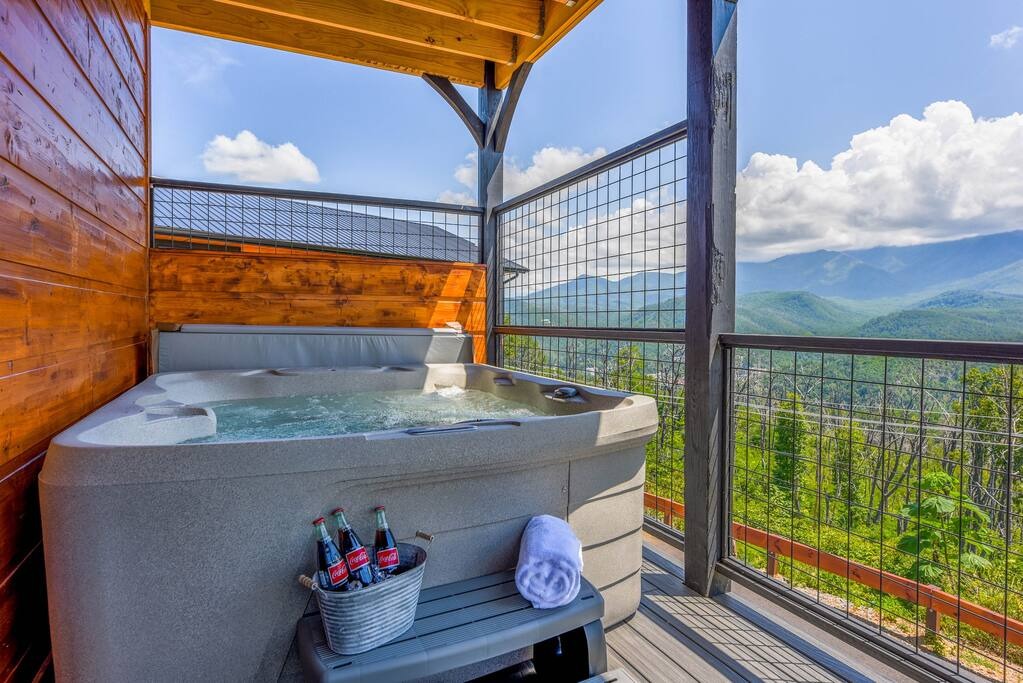
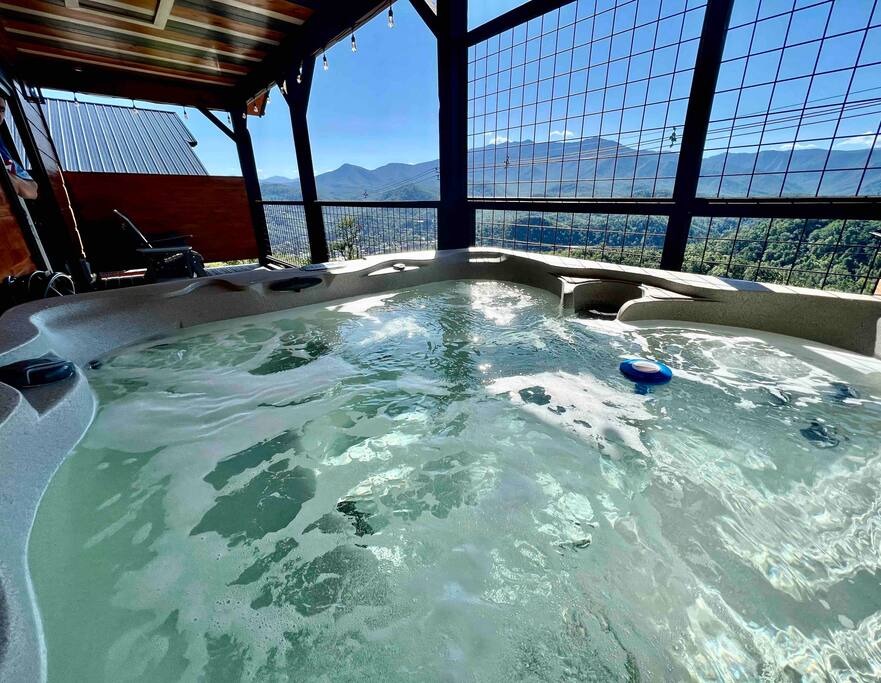
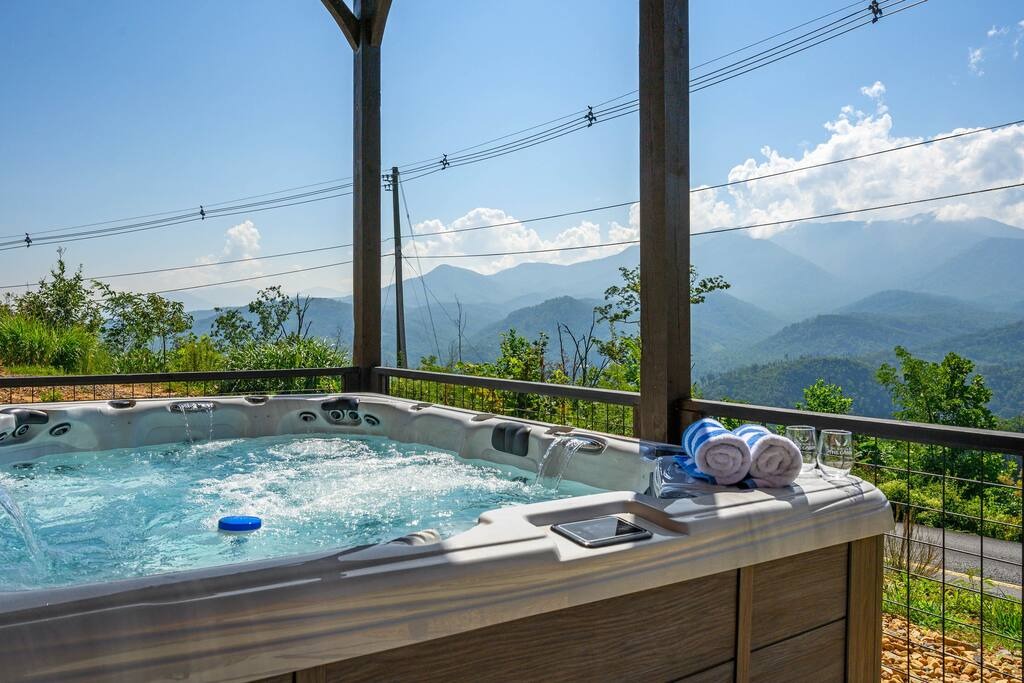
- Hot tub covers down when not in use. Bears occasionally investigate the warm scent.
- Close ground-floor doors and windows when leaving the cabin or going to bed.
- If you see a bear from the deck, enjoy the show, take a photo from a distance, and never feed or approach it. Most Chalet Village bears walk through and continue back into the park within minutes.
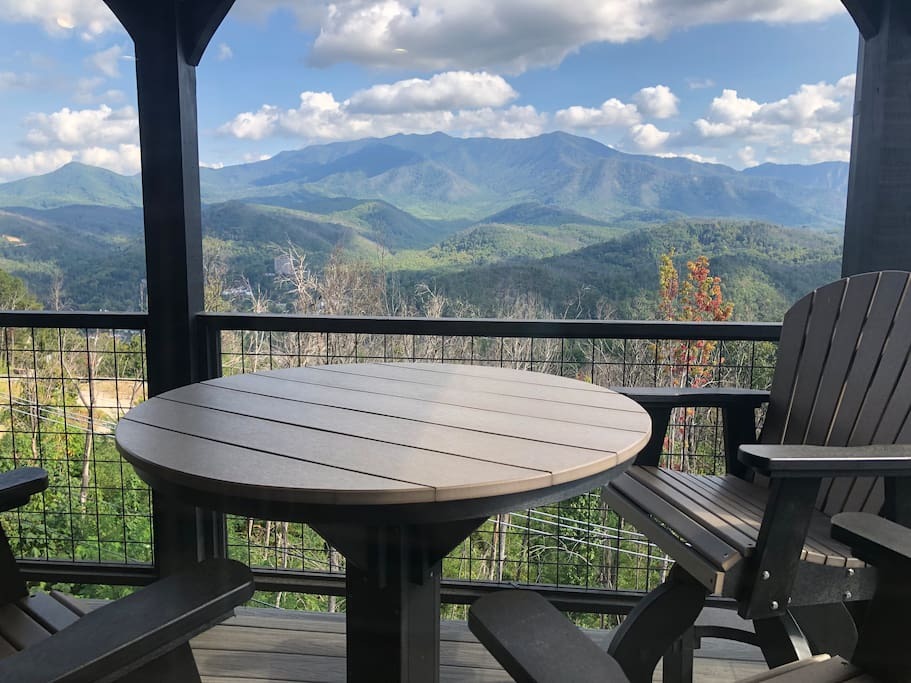
For more on choosing the right cabin for a wildlife-focused Gatlinburg trip, see our Big Sky Lodge and Million Dollar View pages (both have mountain-facing decks that occasionally catch deer, turkey, and the rare bear from the privacy of your hot tub).
Related Guides
Approx Drive Time from Our Cabins
| Bear Viewing Location | Drive Time |
|---|---|
| Roaring Fork Motor Trail | Approx 15 minutes |
| Cades Cove | Approx 45 to 50 minutes |
| Cataloochee Valley | Approx 1 hour 15 minutes |
Make Wildlife the Whole Trip
Combine bear viewing at Cades Cove, elk at Cataloochee, and synchronous fireflies in June from a private cabin base. Our 5 properties sleep 8 to 12 and sit 15 minutes from the park.
View All CabinsFrequently Asked Questions
How many black bears live in the Smoky Mountains?
Great Smoky Mountains National Park is home to approximately 1,900 black bears (about two bears per square mile), one of the densest black bear populations in the eastern United States. The population has roughly tripled since the early 1990s.
When is the best time to see bears in Cades Cove?
Early morning (sunrise to 9 a.m.) and the two hours before sunset from April through October. Spring and early summer produce the most meadow sightings; fall hyperphagia from late September through early November produces the most overall activity.
What do I do if I see a black bear?
Stay at least 50 yards away, never run, and never turn your back. If a bear approaches, make yourself look large, raise your arms, shout, and slowly back away. Never feed a bear under any circumstance; fed bears become dangerous bears that often have to be euthanized.
Are black bears dangerous in the Smokies?
Black bears are generally not aggressive toward humans. Despite the park's roughly 12 million visitors per year, physical-contact incidents typically number under a dozen and have trended down (6 in 2025, vs 10 in 2024). Most problems occur when humans feed bears or leave food unsecured.
Do black bears hibernate in the Smokies?
Smoky Mountain black bears enter a less-deep state called torpor from roughly November through March. Mild winters can bring bears out briefly in December and February. Mothers give birth to cubs in the den around January.
What time of day are bears most active?
Bears are crepuscular, meaning they are most active in the first two hours after sunrise and the last two hours before sunset. Midday sightings are uncommon outside of fall hyperphagia.
Can I take a picture of a bear?
Yes, from a distance using a telephoto lens or phone zoom. Federal regulations require staying 50 yards (150 feet) away from bears and elk inside the park. Bear selfies are illegal, dangerous, and a fast way to be cited by a ranger.
Do I need bear spray in the Smokies?
Carrying bear spray is legal and allowed. It is not strictly necessary for most front-country day hikes but is a common precaution on long backcountry overnights, on the Appalachian Trail through the park, or on trails currently flagged for bear activity. Aim for the bear's face and discharge in 1 to 2 second bursts.
Are there bears in Gatlinburg outside the park?
Yes. Bears regularly pass through Gatlinburg neighborhoods including Chalet Village (where our cabins are located), especially during spring den emergence and fall hyperphagia. The city has rolled out bear-resistant garbage containers and asks all residents and visitors to keep food, grills, and trash secured.